2026-10-31 ·
Adjusting Your Thermostat for Lynnwood Cold Snaps
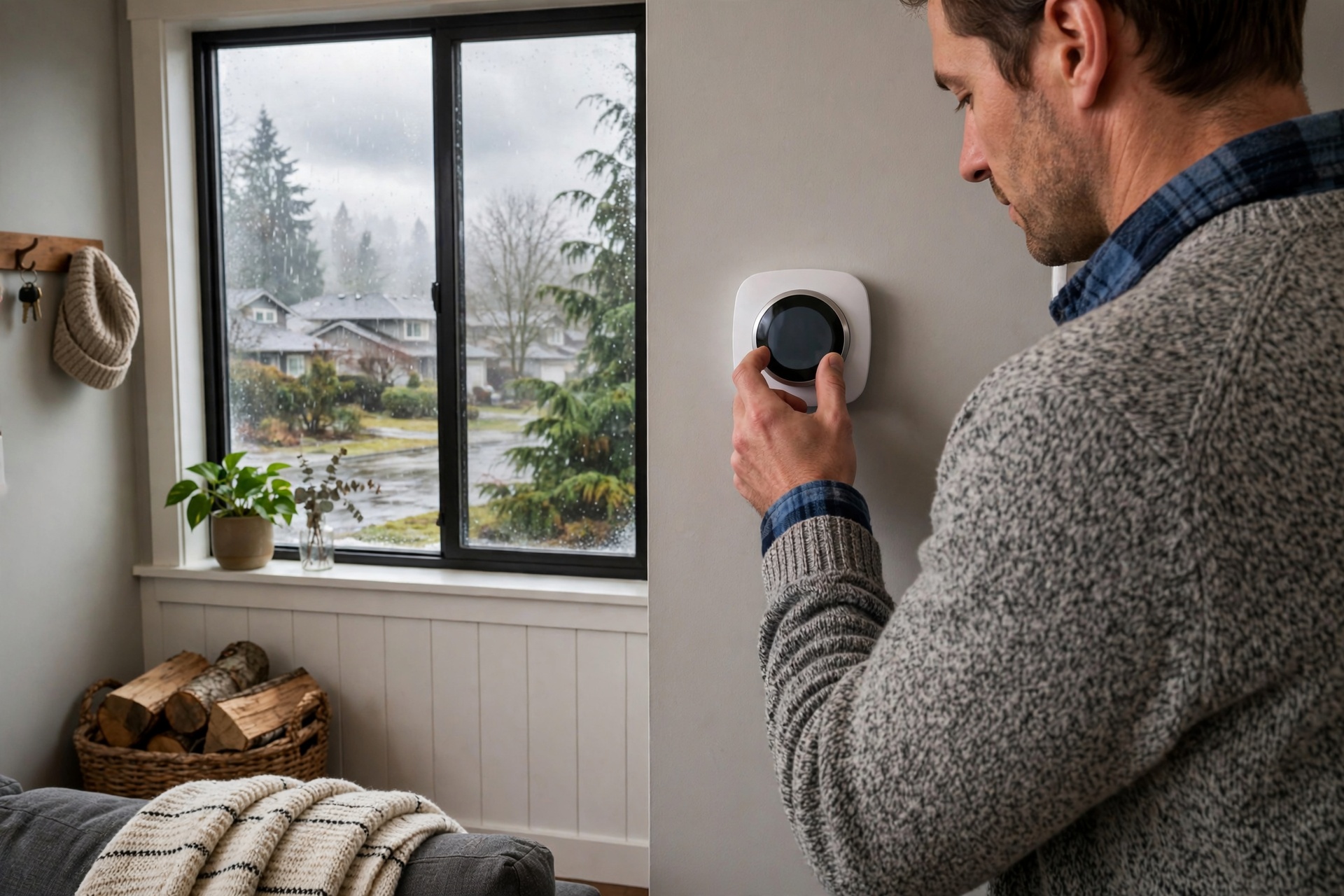
Lynnwood cold snaps arrive quickly in Snohomish County after stretches of mild oceanic climate and wet winters. Homeowners in Downtown Lynnwood, Alderwood, and Scriber Lake see the best results by holding 68°F during occupied hours and dropping to 62°F overnight. These ranges keep indoor conditions stable without overworking systems in homes built from the 1960s through 1990s that often have single-pane windows and limited insulation.
How Lynnwood Cold Snaps Affect Heating Demand
Lynnwood sits in a region where winter temperatures rarely stay below freezing for long but can drop sharply for two or three days after a Pacific front passes. In Alderwood neighborhoods near the mall, heat loss through older roofs and attics increases quickly once winds pick up. Homes around Scriber Lake Park face extra moisture load from nearby wetlands, which makes air feel colder indoors even when the thermometer reads the same. Residents in nearby Edmonds, Mountlake Terrace, and Bothell report the same pattern: systems that run constantly during these brief snaps because thermostats stay set at summer levels. Lowering the setpoint by 6°F at night reduces runtime while still preventing pipes from freezing in crawl spaces common to Snohomish County construction.
Recommended Day and Night Settings for Local Homes
Start with 68°F from 6 a.m. to 10 p.m. when people are active. Drop to 62°F after 10 p.m. and let the system coast until morning. In two-story homes typical of Alderwood, place the main thermostat on the first floor to avoid overheating upstairs bedrooms. Programmable models allow a gradual ramp-up at 5 a.m. so the house reaches 68°F by the time residents wake. Avoid setting above 70°F even during the coldest hours; each extra degree increases energy use noticeably in older ductwork that runs through unconditioned attics. These adjustments work with the wet winter conditions that already add humidity and make the air feel colder at the same temperature reading.
Programming Steps for Cold Snap Days
Check the forecast the night before a snap arrives. Set the daytime hold at 68°F and program a 6°F drop starting at 10 p.m. Place the sensor away from south-facing windows that receive afternoon sun after the clouds clear. In homes near the Lynnwood Convention Center, traffic heat and building mass can keep outdoor temperatures slightly higher, so test the schedule for one day before locking it in. If the system short-cycles, raise the differential setting to 1.5°F instead of the factory 1°F. Review the schedule again after the snap passes to return to normal setbacks that suit the usual mild oceanic pattern.
Signs Your System Needs Attention During Snaps
If the house takes more than 45 minutes to recover from the nighttime drop, check filters first. Dirty filters common after weeks of wet weather restrict airflow and force longer runtimes. Drafts around older windows in Scriber Lake homes also make the thermostat read low, causing unnecessary operation. When these issues persist, review duct condition in the Checking Duct Leaks in Older Lynnwood Homes guide. Consistent short-cycling or failure to reach setpoint points to a need for HVAC Maintenance before the next front moves through.
Preparing for the Next Snap
Review settings each fall before wet winter patterns begin. Keep the schedule simple: 68°F occupied, 62°F setback. Test the overnight drop once before temperatures fall below freezing. Homes in Bothell and Mountlake Terrace that border Lynnwood often share the same housing stock and benefit from identical setbacks. When a snap lasts longer than expected or the system struggles, Lynnwood HVAC offers 24/7 Emergency Service Available to restore operation quickly.